

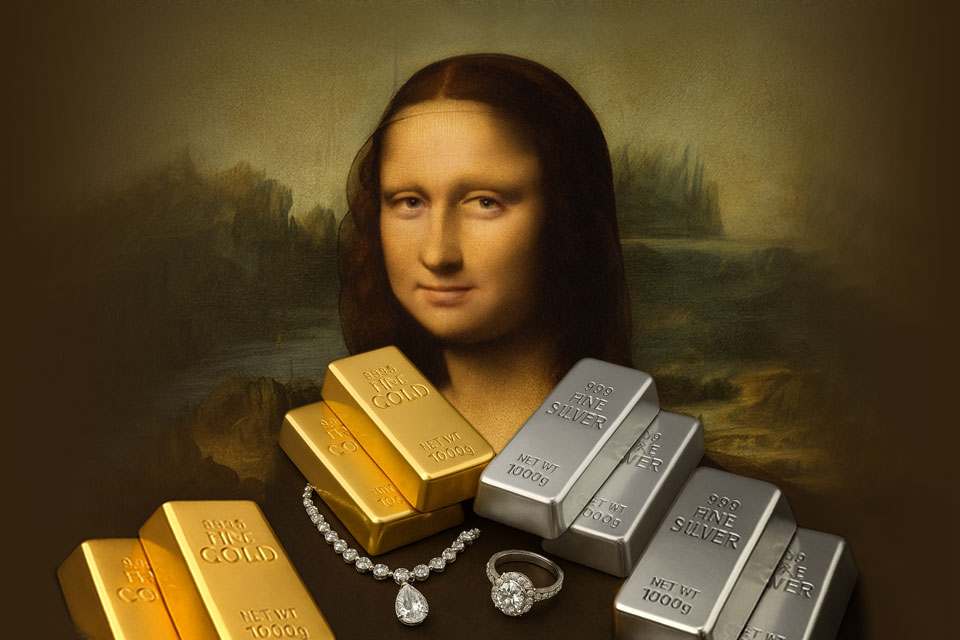
The Mona Lisa vanished once—stolen in 1911. Decades later, in 1996, there was a daring jewelry robbery. In 1998, Camille Corot’s Le Chemin de Sèvres was sliced neatly out of its frame. So while such capers seem the stuff of film, the Louvre has lived them before. Its latest drama—a lightning-fast smash-and-grab in the Apollo Gallery—was, by expert measure, a seven-minute miracle.
The Louvre has always played a long game with its treasures. During the 1940s, as the Germans advanced toward Paris, curators quietly packed up masterpieces and spirited them away to the countryside, hiding them in chateaux and barns until the war passed. That kind of vigilance has never been misplaced. The Louvre’s collections, like those of all great museums, are worth millions—and that value invites both protection and temptation in equal measure.

This time, though, the thieves didn’t go for paintings or sculpture. The gang of four went straight for the gold and jewelry. Which raises an irresistible question: why gold and jewels, instead of a painting that could fetch a fortune?
There could be, as the saying goes, “a million reasons.” But perhaps there’s one that shines brighter.
In recent years, antique “old-cut” diamonds have made a sparkling comeback. These are the hand-cut gems of the Georgian and Victorian eras, known as “old mine” or “cushion” cuts—each with 58 facets, each shaped by eye and hand. Their brilliance is softer, subtler, more human. By contrast, today’s machine-cut “brilliant” diamonds—57 facets of geometric precision—deliver a harder, colder glitter.

The romance of the old cut goes deeper than nostalgia. These diamonds are, by nature, sustainable: recycled, repurposed, and requiring no new mining. They’re imperfect, individual, and in a world of sameness, that makes them irresistible.
So maybe the gang knew exactly what they were doing. Maybe they understood that what they were taking wasn’t just treasure—it was trend. Old-cut stones have become the modern collector’s choice, with a market ready to absorb them quietly, no questions asked.
The loot wasn’t just diamonds, either. Sapphires. Emeralds. Pearls—plenty of them. As my wife would point out, pearls are not only timeless but very much in vogue again. This wasn’t random theft; it was curated taste.

And then there’s the gold. Gold has been real money for over five thousand years, and in our current age of financial jitters, it’s more coveted than ever. Central banks are hoarding it by the ton. Supplies are tightening. Charts are curving upward like rockets. In the past year alone, prices have climbed by roughly 50%, and experts predict even higher peaks ahead.
Hours after the Louvre heist, another French museum—the Maison des Lumières Denis Diderot—was robbed of two thousand gold and silver coins. Each gold piece, worth about $5,600 Canadian, could vanish into anonymity the moment it’s melted down. Gold, once liquefied, tells no tales.
Did the thieves on the cherry picker know that? Almost certainly. Inspector Clouseau himself might have admired the precision. It was a crime that married boldness with economic awareness—a modern heist for modern times. In 2025, as ever, it’s the economy, stupid.

But even the cleverest heists have their flaws. Fencing stolen treasures is never as easy as stealing them. Experts can trace stones, settings, and cuts. Histories can resurface. The Mona Lisa found her way home after two years in hiding. Perhaps, in time, the gold and diamonds of the Apollo Gallery will do the same.
Peter Marsh November 06th 2025

